



Expertise that takes your knowledge in strategic brand marketing up a level.

We’ve blended the best of two worlds. Learn from faculty from both the Department of Business Administration in the Gies College of Business and the Sandage Department of Advertising in the College of Media, as well as from brand marketing, advertising and multimedia industry leaders.
With a curriculum that combines elements of a traditional Master’s degree in business, marketing, and advertising, you will be prepared to:
- Strategically lead in an ever-changing, global multimedia environment
- Think in terms of developing innovative and integrative solutions
- Effectively manage brand messaging and content throughout diverse industries
- Respond effectively to new technologies, emerging media and market trends
- Become skilled in business management, leadership and orchestrating successful teams
- Be a global brand leader in integrated marketing and advertising communications
— COURSE LIST —
1 credit, Marisa Peacock
2 credits, Steve Raquel
3 credits, Rich Pieczynski
3 credits, Jacqueline Hitchon
2 credits, Aric Rindfleisch and Maria Rodas
3 credits, Ewa Maslowska
3 credits, Penne Heede
3 credits, Chang Dae Ham
3 credits, Marisa Peacock
3 credits, Vishal Sachdev
3 credits, Dionne Clifton
3 credits, Michelle Nelson
Our SBC courses are taught by faculty from both the Department of Business Administration in the Gies College of Business and the Sandage Department of Advertising in the College of Media, as well as by brand marketing, advertising and multimedia industry leaders. To complete the MS SBC degree, students will take 32 hours of coursework – 16 hours taught by faculty in advertising/media and 16 taught by faculty in business administration. Non-degree students have the option of completing a three-course certificate or taking individual SBC courses.
1 credit, Marisa Peacock
Introduces foundational concepts of strategic brand communication, including how brands are developed, positioned, and expressed across audiences and channels. Through case studies and applied analysis, students examine the strategic role of brand purpose, identity, and messaging in contemporary organizational and media contexts. The course establishes core frameworks and vocabulary that prepare students for advanced study and professional application in strategic brand communication.
2 credits, Steve Raquel
Explores the fundamentals of brand creation, entrepreneurial identity, and brand building in today’s competitive digital environment. Students examine how both start-ups and established organizations develop brands from ideation through promotion, with emphasis on storytelling, positioning, and strategic differentiation. Tools and strategies for crafting, growing, and managing brands are introduced, along with consideration of brand ethics, responsibilities to key publics, and decision-making related to brand evolution, repositioning, or retirement.
3 credits, Rich Pieczynski
Successful Strategic Brand Communication requires working on a series of projects. This course provides a socio-technical perspective to the management of projects. The technical dimensions deal with needs analysis, work breakdown, scheduling, resource allocation, risk management, and performance tracking and evaluation – within the allocated time frame and cost. The sociocultural dimensions include attributes of sound leadership, formation and management of teams, and managing customer expectations in order to formulate consistent, integrated campaigns across channels.
3 credits, Jacqueline Hitchon
Examines the role of consumer insight as the foundation of effective brand and marketing strategy. Students learn how evidence from primary and secondary research reveals meaningful patterns in what audiences say, feel, and do, and how these findings translate into actionable strategic and creative direction. Emphasis is placed on distinguishing true insight from intuition, interpreting consumer data, and applying audience-centered understanding to solve marketing problems and drive measurable brand outcomes. The course prepares students to generate and apply consumer insights in professional brand development contexts.
2 credits, Aric Rindfleisch and Maria Rodas
Within the context of globalization, the course underscores the importance of understanding consumers’ values, attitudes, and behaviors for effective product positioning, brand value and effective marketing communications across borders. Focus on consumer behavior and brand positioning across local, regional, and global contexts. This course is designed to provide students with an advanced understanding of consumer behavior in a global context.
3 credits, Ewa Maslowska
This course will focus on the method and analysis for consumer insights but also for measuring effectiveness of various promotional strategies and campaign effectiveness. This includes an overview of quantitative research methods with emphasis on analysis and interpretation of data, and application to evaluating effectiveness of promotional strategies.
3 credits, Penne Heede
Creative strategy serves as the link between customer insights, brand intent, and creative execution in this applied, hands-on learning experience. Students develop messaging, creative briefs, and cohesive tactics grounded in audience mindsets and personas. Emphasis is placed on understanding the creative process, collaborating effectively with creative partners, and making sound strategic decisions. Throughout the term, students practice shaping, evaluating, and presenting ideas, translating strategy into clear creative direction, and using AI as a supportive tool while maintaining human judgment, craft, and brand integrity.
3 credits, Chang Dae Ham
Brand image, reputation, and equity are examined through the strategic management of media channels and the use of audience and performance data. Students gain both conceptual and practical insight into the contemporary advertising media landscape, with particular emphasis on digital and emerging platforms. Using a consumer-centric perspective, the course develops students’ strategic and analytical skills to evaluate media performance and address real-world media and marketing challenges.
3 credits, Marisa Peacock
This graduate-level course explores the strategic, managerial, and regulatory dimensions of social media and digital content. Students will learn how to develop, manage, and evaluate social media strategies that align with brand goals, audience insights, and advertising regulations. Emphasis is placed on digital asset management, content governance, ethical communication, and compliance with industry standards such as FTC advertising guidelines and platform-specific policies. Through applied projects and a client-based final presentation, students gain practical experience designing data-driven, compliant, and engaging social media campaigns.
3 credits, Vishal Sachdev
Prepares students to utilize data for targeting and building customer and brand relationships, with an emphasis on new and emerging media. The students will get exposure to principles of working with structured data using relational databases and data warehouses. They will understand how to work with unstructured data from the web. They will also get exposure to select data mining methods relevant to data commonly worked on by marketing and communication executives and apply these concepts with cases/exercises during each of these modules.
3 credits, Dionne Clifton
An advanced examination of sales management as a strategic driver of brand equity and revenue growth, focusing on how sales organizations align with broader brand strategy. Students analyze and apply evidence-based frameworks for designing, leading, and optimizing sales teams and structures. Emphasis is placed on strategic decision-making, cross-functional integration, and performance management to prepare students for senior-level brand and commercial leadership roles.
3 credits, Michelle Nelson
Examines marketing communications and promotion management within the context of integrated strategic brand communication. Students learn the process of planning and executing a comprehensive brand communications campaign, including situation analysis, segmentation, targeting, positioning, message strategy, budgeting, media planning, and evaluation. Emphasis is placed on understanding the strengths and limitations of major promotional tools—such as advertising, digital marketing, and public relations—and applying them in consumer and business contexts. Through case analysis and applied work, students develop an integrated campaign for a real-world client.
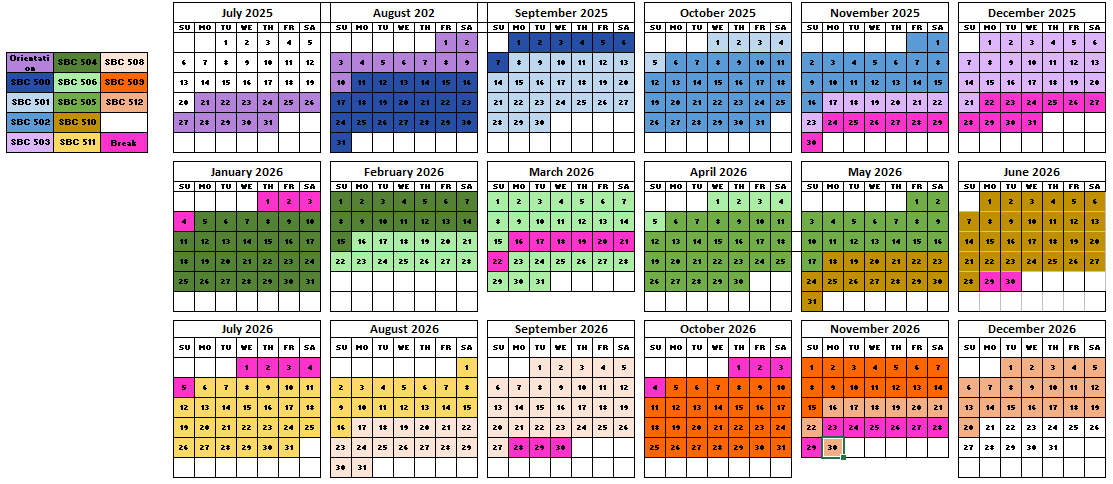
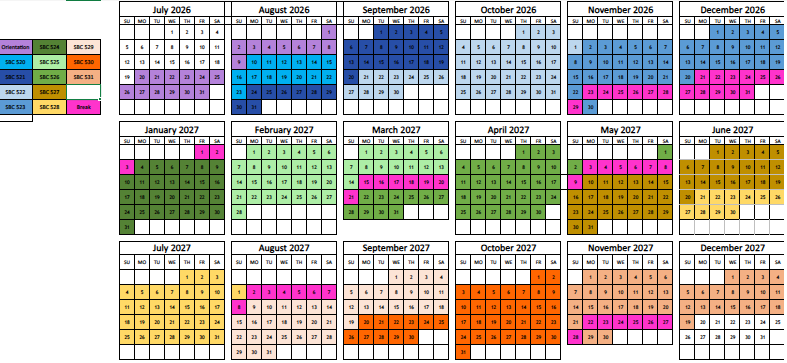
— COURSE CALENDARS —
2025-2026 Course Calendar
2026-2027 Course Calendar
IT'S EASY
TO APPLY
MASTER'S PROGRAM
To complete the MS SBC degree, students will take 32 hours of coursework. A professional capstone project is designed to give students practical skills in applying the lessons learned before graduation. All courses are required; there are no electives, as the emphasis in diverse global disciplines are built into the curriculum. Students must also maintain a minimum GPA of 2.75 to be eligible for graduation.
Get even more answers from our frequently asked questions page!
Additional application information can be found through the University of Illinois’ Graduate College. Please visit their web page for minimum requirements and application instructions.
Applications Open Soon
Build the skills to lead brands in a world shaped by data, AI, emerging media and changing consumer behavior.
Early bird deadline: April 15, 2027
Priority deadline: June 1, 2027
Final deadline: July 15, 2027
Certificate Options
Strategic Brand Communication Essentials" Certificate (7 credits)
- SBC 501, Strategic Branding: Global Perspectives (2 credits)
- SBC 502, Entrepreneurship in Business (3 credits)
- SBC 503, Consumer Insights I (2 credits)
"Strategic Brand Communication Insights" Certificate (8 credits)
- SBC 503, Consumer Insights I (2 credits)
- SBC 506, Measurement and Evaluation (3 credits)
- SBC 505, Consumer Insights II (3 credits)
"Strategic Brand Communication Media and Analytics" (9 credits)
- SBC 506, Measurement and Evaluation (3 credits)
- SBC 509, Digital Media & Brand Reputation Management (3 credits)
- SBC 511, Strategic Analytics & Data Visualization (3 credits)
"Strategic Brand Communication" Certificate - Customizable - Choose 3 SBC courses excluding SBC 512
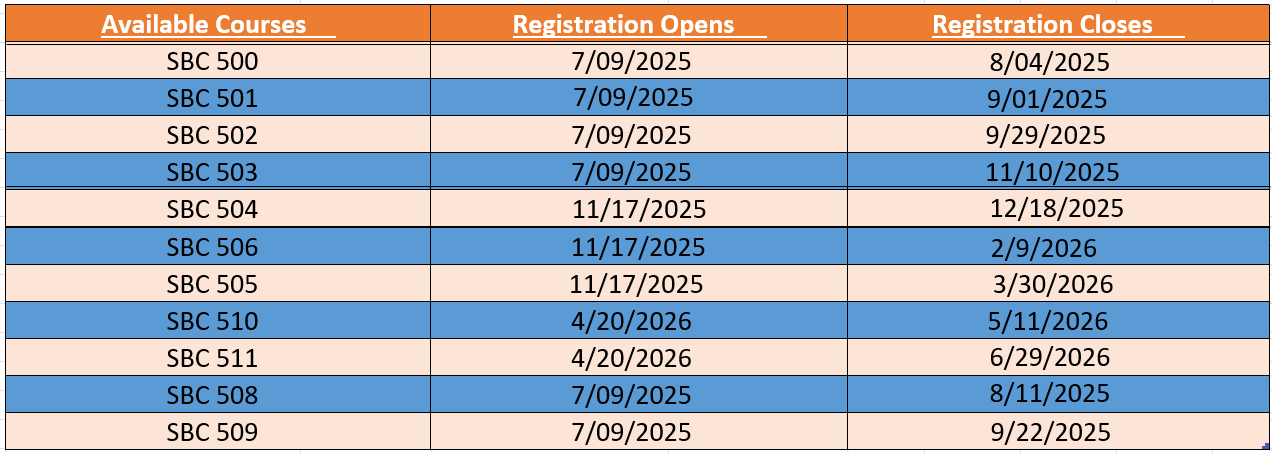
Non-Degree Enrollment Schedule:
NON-DEGREE
Certificate and Individual Course Options
Students can complete a three-course SBC certificate or take an individual course from the program. Click here to view the Non-Degree Enrollment Schedule.
CONTACT
If you have questions or would like additional information, please fill out the Request for Information form, schedule a call from the button below, or email Brooke Bear at blbear@illinois.edu.